
Serious bleeding can become life-threatening in minutes. Knowing how to recognise it and what to do can make the difference between life and death.
Whether you’re at work, at home, out enjoying the countryside or simply going about your day, an accident can happen when you least expect it. A deep cut, a machinery accident or a serious injury from a fall can cause significant blood loss, and the actions taken in those first few minutes really matter.
So, what actually happens when someone loses a significant amount of blood? What signs should we look for, and how can a first aider help?
Let’s break it down.
Why is serious bleeding so dangerous?
Blood does much more than simply travel around the body. It carries oxygen and nutrients to our organs and tissues, helps regulate body temperature and contains the components needed to form clots and control bleeding.
When someone loses a significant amount of blood, the body has less blood available to circulate. This means less oxygen reaches vital organs, including the brain, heart and kidneys.
Initially, the body tries to compensate. The heart beats faster to maintain circulation, and blood vessels narrow to help preserve blood flow to essential organs. However, these mechanisms have their limits.
If blood loss continues, the body may no longer be able to maintain adequate circulation. This can lead to hypovolaemic shock, a life-threatening condition in which the circulating blood volume becomes insufficient to supply the body’s tissues with oxygen.
Without rapid treatment, severe blood loss can result in organ damage, cardiac arrest and death.
It’s also worth remembering that the amount of blood lost isn’t always obvious. Clothing can absorb a surprising amount of blood, bleeding may occur beneath the body, and serious internal bleeding may not be visible at all.
What are the signs and symptoms of serious bleeding?
The signs depend on the amount of blood lost, how quickly it is happening and where the injury is located.
Visible signs of severe bleeding
Look for:
- Blood flowing heavily or continuously from a wound.
- Blood spurting or pumping from an injury.
- Blood rapidly soaking through clothing or dressings.
- A large or deep wound, traumatic amputation or significant penetrating injury.
- A pool of blood beneath the casualty.
- Bleeding that doesn’t stop or slow with firm direct pressure.
Don’t wait for every sign to appear. A casualty can deteriorate quickly, and bleeding that initially looks manageable may become life-threatening.
Signs that the casualty may be developing shock
As blood loss affects circulation, you may notice:
- Pale, cold or clammy skin. The skin may look unusually pale or grey, and the casualty may feel cold and sweaty.
- A rapid pulse. The heart beats faster in an attempt to maintain circulation.
- Rapid breathing. The body tries to compensate for reduced oxygen delivery.
- Dizziness or light-headedness. The brain may not be receiving enough oxygenated blood.
- Anxiety, restlessness or confusion. Changes in behaviour can be an early indication that the casualty is deteriorating.
- Increasing weakness or reduced responsiveness. As shock progresses, the casualty may become drowsy or lose consciousness.
A casualty may not display all these signs, particularly early on. A normal-looking skin colour or an apparently alert casualty does not rule out significant blood loss.
What about internal bleeding?
Not all serious bleeding is visible.
Internal bleeding can occur following road traffic collisions, falls, crush injuries or penetrating trauma. It may involve organs, blood vessels or the spaces within the chest, abdomen or pelvis.
Possible warning signs include:
- Abdominal pain, swelling or tenderness.
- Bruising following a significant impact.
- Chest pain or difficulty breathing.
- Pale, cold or clammy skin.
- A rapid pulse, dizziness or increasing weakness.
- Confusion, drowsiness or collapse.
These signs aren’t exclusive to internal bleeding, but following a significant injury they should raise concern.
If you suspect serious internal bleeding, call 999 immediately. You cannot control internal bleeding with an external dressing, and the casualty needs urgent medical assessment.
What should a first aider do?
When dealing with life-threatening external bleeding, the priority is to control the blood loss as quickly as possible while arranging emergency help.
1. Make the scene safe
Before approaching, check for hazards. These might include moving machinery, traffic, broken glass, electrical hazards or anything else that could put you at risk.
Use disposable gloves and other appropriate protective equipment if available.
If it is safe to do so, approach the casualty and identify any immediately life-threatening problems, including catastrophic bleeding.
2. Call 999
Get emergency medical assistance as soon as possible.
If other people are present, delegate tasks. Ask someone to call 999 while you concentrate on controlling the bleeding. If you’re alone, use your phone on speakerphone so you can continue providing first aid while speaking to the call handler.
Tell the call handler what has happened, where the injury is and how severe the bleeding appears to be. Follow their instructions.
3. Apply firm, direct pressure
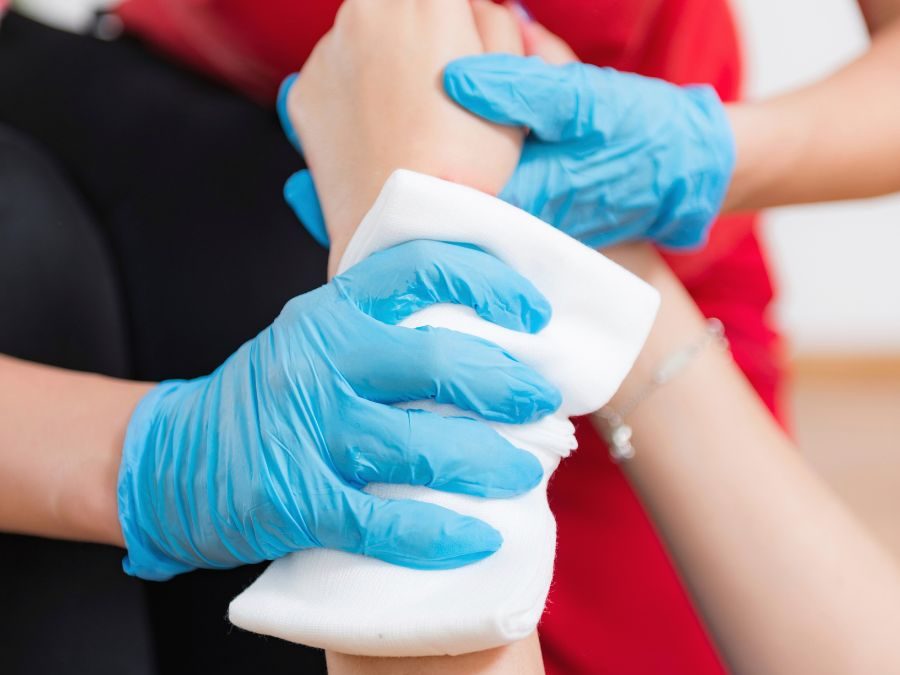
 For most external bleeding, firm, direct pressure over the bleeding site is the first-line intervention.
Use a sterile dressing if available, or a clean cloth if necessary. Press firmly and continuously over the wound to help control the blood flow and support clot formation.
If the casualty is conscious and able to help, they may be able to apply pressure themselves while you arrange assistance.
Maintain pressure. Avoid repeatedly lifting the dressing to check whether the bleeding has stopped, as this can disrupt clot formation.
Once the bleeding is controlled, secure the dressing with a pressure bandage if appropriate.
If blood comes through the dressing, maintain pressure and reinforce it with additional material rather than repeatedly removing the original dressing. If bleeding remains uncontrolled, reassess the situation and escalate your intervention.
4. Deal with embedded objects carefully
If an object, such as a knife or piece of glass, is embedded in the wound, do not remove it.
Removing it could make the bleeding substantially worse.
Instead, apply pressure around the object, avoiding direct pressure on it, and use dressings to help stabilise it. Call 999 and monitor the casualty closely.
5. Consider wound packing and haemostatic dressings
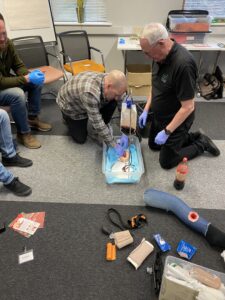
Some deep wounds, particularly those in areas where a tourniquet cannot be applied, may require wound packing.
Wound packing training
A haemostatic dressing is designed to help blood clot. When used correctly, it can support the control of life-threatening bleeding.
Depending on the wound and the equipment available, a suitable dressing may need to be packed firmly into the wound before continuous direct pressure is applied.
Wound packing is a skill that requires appropriate training. It is not suitable for every wound, and you should follow your training, the product instructions and emergency call-handler guidance.
Once bleeding is controlled, secure the dressing as appropriate and continue monitoring the casualty.
6. Use a tourniquet when indicated
A manufactured tourniquet can be life-saving when there is life-threatening bleeding from an arm or leg that cannot be controlled by direct pressure.
Where indicated, apply it as soon as possible rather than allowing uncontrolled bleeding to continue.
The general principles are:
- Position the tourniquet approximately 5–7 cm above the injury, avoiding a joint. If the injury site cannot be identified or accessed, follow your training and the manufacturer’s instructions for placement.
- Tighten it until the bleeding stops. This can be extremely painful, but effective application is essential.
- Record the time it was applied.
- Do not loosen or remove it. Leave this to healthcare professionals.
- If bleeding continues, a second tourniquet may be needed above the first, following your training and the device instructions.
A tourniquet is not a routine treatment for every cut or graze. It is intended for life-threatening limb bleeding, and proper training helps ensure it is applied effectively.
7. Help prevent further deterioration
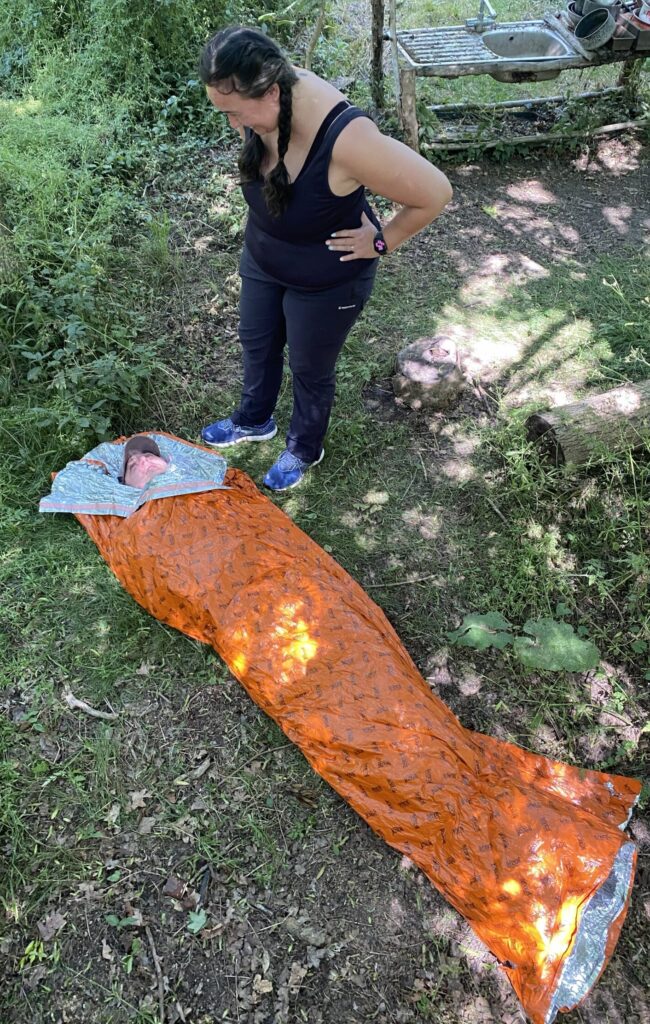
Once the bleeding is being controlled, continue to monitor the casualty.
- Help them lie down in a position they can tolerate, unless their injuries or breathing make this inappropriate.
- Keep them warm using a blanket or coat, taking care not to overheat them.
- Reassure them and explain what you’re doing.
- Monitor their responsiveness and breathing.
- Do not give them anything to eat or drink.
- Be prepared to reassess the casualty if their condition changes.
If they become unresponsive and are not breathing normally, follow the emergency call handler’s instructions and begin CPR as appropriate. If catastrophic bleeding is still present, controlling it remains an immediate priority.
What about chest wounds?
An open chest wound needs particular care because air may move through the wound into or out of the chest cavity, potentially affecting breathing.
Call 999 immediately. Under the 2025 Resuscitation Council UK first-aid guidance, an open chest wound should generally be left uncovered so that it can communicate freely with the external environment.
If there is localised external bleeding, apply direct pressure to the bleeding point where necessary. Specialised non-occlusive or vented dressings may be considered by appropriately trained responders with the correct equipment, following their training and clinical guidance.
Do not automatically apply an ordinary airtight or three-sided dressing to an open chest wound.
Why monitoring matters
Stopping the visible bleeding is vital, but it is only part of the job.
A casualty who initially appears alert may deteriorate as blood loss affects their circulation. Keep reassessing their responsiveness, breathing, skin colour and overall condition.
Look for changes rather than relying on a single observation. Increasing confusion, worsening pallor, rapid breathing or reduced responsiveness should increase your concern.
When the ambulance crew arrives, give them a clear handover. Explain what happened, the signs and symptoms you observed, the first aid you provided, whether the bleeding was controlled, and the time a tourniquet was applied, if used.
The key message: act quickly
Serious bleeding can be frightening to witness, but having a clear plan can help you respond effectively.
Remember the essentials:
- Recognise life-threatening bleeding early.
- Make sure the scene is safe.
- Call 999.
- Apply firm, direct pressure.
- Use appropriate dressings, wound packing or a tourniquet when indicated and within your training.
- Help prevent heat loss and monitor the casualty until professional help takes over.
You don’t need to be a paramedic to make a difference. Prompt, effective first aid can save lives while the emergency services are on their way.
Learn how to respond with Gain First Aid Training
At Gain First Aid Training, we believe first aid is about more than knowing what to do on paper. It’s about developing the knowledge, practical skills and confidence to act when it matters.
Our first aid training helps individuals and businesses prepare for emergencies, including recognising serious injuries and responding appropriately.
Whether you’re looking to train your workplace first aiders or improve your own first aid knowledge, we’re here to help.
Get in touch with us to discuss your training requirements.
📞 01473 396111
Serious bleeding can become life-threatening in minutes. Knowing how to recognise it and what to do can make the difference between life and death.
Whether you’re at work, at home, out enjoying the countryside or simply going about your day, an accident can happen when you least expect it. A deep cut, a machinery accident or a serious injury from a fall can cause significant blood loss, and the actions taken in those first few minutes really matter.
So, what actually happens when someone loses a significant amount of blood? What signs should we look for, and how can a first aider help?
Let’s break it down.
Why is serious bleeding so dangerous?
Blood does much more than simply travel around the body. It carries oxygen and nutrients to our organs and tissues, helps regulate body temperature and contains the components needed to form clots and control bleeding.
When someone loses a significant amount of blood, the body has less blood available to circulate. This means less oxygen reaches vital organs, including the brain, heart and kidneys.
Initially, the body tries to compensate. The heart beats faster to maintain circulation, and blood vessels narrow to help preserve blood flow to essential organs. However, these mechanisms have their limits.
If blood loss continues, the body may no longer be able to maintain adequate circulation. This can lead to hypovolaemic shock, a life-threatening condition in which the circulating blood volume becomes insufficient to supply the body’s tissues with oxygen.
Without rapid treatment, severe blood loss can result in organ damage, cardiac arrest and death.
It’s also worth remembering that the amount of blood lost isn’t always obvious. Clothing can absorb a surprising amount of blood, bleeding may occur beneath the body, and serious internal bleeding may not be visible at all.
What are the signs and symptoms of serious bleeding?
The signs depend on the amount of blood lost, how quickly it is happening and where the injury is located.
Visible signs of severe bleeding
Look for:
- Blood flowing heavily or continuously from a wound.
- Blood spurting or pumping from an injury.
- Blood rapidly soaking through clothing or dressings.
- A large or deep wound, traumatic amputation or significant penetrating injury.
- A pool of blood beneath the casualty.
- Bleeding that doesn’t stop or slow with firm direct pressure.
Don’t wait for every sign to appear. A casualty can deteriorate quickly, and bleeding that initially looks manageable may become life-threatening.
Signs that the casualty may be developing shock
As blood loss affects circulation, you may notice:
- Pale, cold or clammy skin. The skin may look unusually pale or grey, and the casualty may feel cold and sweaty.
- A rapid pulse. The heart beats faster in an attempt to maintain circulation.
- Rapid breathing. The body tries to compensate for reduced oxygen delivery.
- Dizziness or light-headedness. The brain may not be receiving enough oxygenated blood.
- Anxiety, restlessness or confusion. Changes in behaviour can be an early indication that the casualty is deteriorating.
- Increasing weakness or reduced responsiveness. As shock progresses, the casualty may become drowsy or lose consciousness.
A casualty may not display all these signs, particularly early on. A normal-looking skin colour or an apparently alert casualty does not rule out significant blood loss.
What about internal bleeding?
Not all serious bleeding is visible.
Internal bleeding can occur following road traffic collisions, falls, crush injuries or penetrating trauma. It may involve organs, blood vessels or the spaces within the chest, abdomen or pelvis.
Possible warning signs include:
- Abdominal pain, swelling or tenderness.
- Bruising following a significant impact.
- Chest pain or difficulty breathing.
- Pale, cold or clammy skin.
- A rapid pulse, dizziness or increasing weakness.
- Confusion, drowsiness or collapse.
These signs aren’t exclusive to internal bleeding, but following a significant injury they should raise concern.
If you suspect serious internal bleeding, call 999 immediately. You cannot control internal bleeding with an external dressing, and the casualty needs urgent medical assessment.
What should a first aider do?
When dealing with life-threatening external bleeding, the priority is to control the blood loss as quickly as possible while arranging emergency help.
1. Make the scene safe
Before approaching, check for hazards. These might include moving machinery, traffic, broken glass, electrical hazards or anything else that could put you at risk.
Use disposable gloves and other appropriate protective equipment if available.
If it is safe to do so, approach the casualty and identify any immediately life-threatening problems, including catastrophic bleeding.
2. Call 999
Get emergency medical assistance as soon as possible.
If other people are present, delegate tasks. Ask someone to call 999 while you concentrate on controlling the bleeding. If you’re alone, use your phone on speakerphone so you can continue providing first aid while speaking to the call handler.
Tell the call handler what has happened, where the injury is and how severe the bleeding appears to be. Follow their instructions.
3. Apply firm, direct pressure
For most external bleeding, firm, direct pressure over the bleeding site is the first-line intervention.
Use a sterile dressing if available, or a clean cloth if necessary. Press firmly and continuously over the wound to help control the blood flow and support clot formation.
If the casualty is conscious and able to help, they may be able to apply pressure themselves while you arrange assistance.
Maintain pressure. Avoid repeatedly lifting the dressing to check whether the bleeding has stopped, as this can disrupt clot formation.
Once the bleeding is controlled, secure the dressing with a pressure bandage if appropriate.
If blood comes through the dressing, maintain pressure and reinforce it with additional material rather than repeatedly removing the original dressing. If bleeding remains uncontrolled, reassess the situation and escalate your intervention.
4. Deal with embedded objects carefully
If an object, such as a knife or piece of glass, is embedded in the wound, do not remove it.
Removing it could make the bleeding substantially worse.
Instead, apply pressure around the object, avoiding direct pressure on it, and use dressings to help stabilise it. Call 999 and monitor the casualty closely.
5. Consider wound packing and haemostatic dressings
Some deep wounds, particularly those in areas where a tourniquet cannot be applied, may require wound packing.
Wound packing training
A haemostatic dressing is designed to help blood clot. When used correctly, it can support the control of life-threatening bleeding.
Depending on the wound and the equipment available, a suitable dressing may need to be packed firmly into the wound before continuous direct pressure is applied.
Wound packing is a skill that requires appropriate training. It is not suitable for every wound, and you should follow your training, the product instructions and emergency call-handler guidance.
Once bleeding is controlled, secure the dressing as appropriate and continue monitoring the casualty.
6. Use a tourniquet when indicated
A manufactured tourniquet can be life-saving when there is life-threatening bleeding from an arm or leg that cannot be controlled by direct pressure.
Where indicated, apply it as soon as possible rather than allowing uncontrolled bleeding to continue.
The general principles are:
- Position the tourniquet approximately 5–7 cm above the injury, avoiding a joint. If the injury site cannot be identified or accessed, follow your training and the manufacturer’s instructions for placement.
- Tighten it until the bleeding stops. This can be extremely painful, but effective application is essential.
- Record the time it was applied.
- Do not loosen or remove it. Leave this to healthcare professionals.
- If bleeding continues, a second tourniquet may be needed above the first, following your training and the device instructions.
A tourniquet is not a routine treatment for every cut or graze. It is intended for life-threatening limb bleeding, and proper training helps ensure it is applied effectively.
7. Help prevent further deterioration
Once the bleeding is being controlled, continue to monitor the casualty.
- Help them lie down in a position they can tolerate, unless their injuries or breathing make this inappropriate.
- Keep them warm using a blanket or coat, taking care not to overheat them.
- Reassure them and explain what you’re doing.
- Monitor their responsiveness and breathing.
- Do not give them anything to eat or drink.
- Be prepared to reassess the casualty if their condition changes.
If they become unresponsive and are not breathing normally, follow the emergency call handler’s instructions and begin CPR as appropriate. If catastrophic bleeding is still present, controlling it remains an immediate priority.
What about chest wounds?
An open chest wound needs particular care because air may move through the wound into or out of the chest cavity, potentially affecting breathing.
Call 999 immediately. Under the 2025 Resuscitation Council UK first-aid guidance, an open chest wound should generally be left uncovered so that it can communicate freely with the external environment.
If there is localised external bleeding, apply direct pressure to the bleeding point where necessary. Specialised non-occlusive or vented dressings may be considered by appropriately trained responders with the correct equipment, following their training and clinical guidance.
Do not automatically apply an ordinary airtight or three-sided dressing to an open chest wound.
Why monitoring matters
Stopping the visible bleeding is vital, but it is only part of the job.
A casualty who initially appears alert may deteriorate as blood loss affects their circulation. Keep reassessing their responsiveness, breathing, skin colour and overall condition.
Look for changes rather than relying on a single observation. Increasing confusion, worsening pallor, rapid breathing or reduced responsiveness should increase your concern.
When the ambulance crew arrives, give them a clear handover. Explain what happened, the signs and symptoms you observed, the first aid you provided, whether the bleeding was controlled, and the time a tourniquet was applied, if used.
The key message: act quickly
Serious bleeding can be frightening to witness, but having a clear plan can help you respond effectively.
Remember the essentials:
- Recognise life-threatening bleeding early.
- Make sure the scene is safe.
- Call 999.
- Apply firm, direct pressure.
- Use appropriate dressings, wound packing or a tourniquet when indicated and within your training.
- Help prevent heat loss and monitor the casualty until professional help takes over.
You don’t need to be a paramedic to make a difference. Prompt, effective first aid can save lives while the emergency services are on their way.
Learn how to respond with Gain First Aid Training
At Gain First Aid Training, we believe first aid is about more than knowing what to do on paper. It’s about developing the knowledge, practical skills and confidence to act when it matters.
Our first aid training helps individuals and businesses prepare for emergencies, including recognising serious injuries and responding appropriately.
Whether you’re looking to train your workplace first aiders or improve your own first aid knowledge, we’re here to help.
Get in touch with us to discuss your training requirements.
📞 01473 396111